Showing posts with label Weather. Show all posts

Monday, February 02, 2026

Winter's Benefit

This winter has been brutal with its cold, ice and snow. While each winter has its own personality, this one has been particularly brisk. 

We've had several mild winters in recent years, and nothing like the current deep freeze in a very long time. This year, the biting cold and ice feel almost corrective, as if nature is taking a long, bracing breath to let us know she's here. 

In moments like this, I hope that the bitter cold is doing more than numbing our fingers and making it hard to feed the cattle. I cross my fingers and wonder if it might also be thinning out the ranks of the insects that have plagued our homes, gardens, and forests. 

Stink bugs, spotted lanternflies, and other invasive pests have become unwelcome fixtures in Virginia. Could a hard freeze help eliminate these pests?

I went looking to see what I could find out.

Basically, extreme cold can kill bugs, but the story depends on the species, the timing, and the way each insect has adapted to survive winter.

The Limits of Insect Toughness

Most insects survive winter by entering a state called diapause. This is a kind of suspended animation that slows their metabolism and helps them conserve energy. Many also produce natural antifreeze compounds that keep their cells from rupturing in the cold. But these adaptations have limits. Every species has a “lethal temperature threshold,” the point at which cold overwhelms their defenses.

For the brown marmorated stink bug, which showed up in Virginia about 20 years ago, that threshold is surprisingly high. Research shows that prolonged exposure to temperatures below 14°F (–10°C) can kill a significant portion of the population. A deep freeze that lasts several days can reduce their numbers, especially if it arrives suddenly before they’ve fully acclimated. 

The catch is that stink bugs often overwinter inside human structures. They're in our attics, wall voids, barns - basically anywhere temperatures stay warmer than the outdoors. The ones tucked into your siding will likely survive; the ones sheltering in leaf litter or tree bark may not.

The spotted lanternfly, a far newer invader, has a different vulnerability. Adults die off each winter regardless of temperature, but their egg masses are the real concern. Studies suggest that lanternfly eggs begin to suffer mortality when temperatures drop below 10°F (–12°C), and extended cold can kill a large percentage. 

Because lanternflies lay eggs on exposed surfaces such as trees, rocks, firewood, and outdoor equipment, they are more at the mercy of the weather than stink bugs. A deep freeze can meaningfully reduce the number of hatchlings come spring.

Other pests, such as ticks, emerald ash borers, and certain agricultural insects, also face winter mortality when temperatures plunge. But again, survival depends on microclimates: a few inches of insulating snow, a south‑facing slope, or a warm pocket under bark can make the difference between life and death.

Why Timing Matters

A sudden cold snap after a mild autumn can be especially damaging to insects. If they haven’t fully hardened off, meaning a physiological process that prepares them for winter, they are more likely to die. Conversely, if the freeze arrives after weeks of steady cooling, many species will already be in their most resilient state.

This year’s freeze, arriving after a stretch of unseasonably warm days in December, may have caught some pests off guard. Egg masses, nymphs, and adults that failed to find proper shelter could experience higher mortality than usual.

The Hope and the Reality

A deep freeze rarely wipes out an entire pest population. Nature is too redundant, too stubborn, too adaptive for that. But winter can knock populations down a notch, buying time for ecosystems, agriculture, and homeowners. Even a 20–40% reduction in surviving eggs or adults can translate into noticeably fewer pests in the spring and summer.

For invasive species like the lanternfly, which have no natural predators here and reproduce explosively, every bit of winter mortality helps. For stink bugs, which have become frustratingly adept at using human structures as winter condos, the effect is more modest but still meaningful.

A Quiet Partnership with Winter

There’s something satisfying about imagining the cold doing some of the work for us. In a world where invasive species often feel unstoppable, winter reminds us that the natural world still has its own checks and balances. The deep freeze may not be a silver bullet, but it is a quiet ally. It is thinning the ranks, slowing the spread, and giving our forests, orchards, and homes a brief reprieve from these damaging insects.

And when spring finally arrives, the survivors will emerge. Hopefully, they will be fewer in number.


References

Brown Marmorated Stink Bug (Halyomorpha halys)
• Cira, T. M., et al. “Cold Tolerance of the Brown Marmorated Stink Bug.” Environmental Entomology, 2016.
• Penn State Extension. “Brown Marmorated Stink Bug: Winter Survival and Cold Tolerance.”
• USDA ARS. “Invasive Stink Bug Winter Mortality Research.” Spotted Lanternfly (Lycorma delicatula)
• Urban, J. M. “Perspective: Shedding Light on the Spotted Lanternfly.” Environmental Entomology, 2020.
• Penn State Extension. “Spotted Lanternfly Egg Mass Survival in Winter.”
• USDA APHIS. “Spotted Lanternfly: Biology and Seasonal Patterns.”
General Insect Cold Tolerance
• Sinclair, B. J., et al. “Insect Cold Tolerance: Ecology, Physiology, and Evolution.” Annual Review of Entomology, 2015.
• Virginia Cooperative Extension. “How Winter Temperatures Affect Insect Populations.”

Tuesday, January 13, 2026

Just Pictures


Wednesday, December 10, 2025

Ice and Snow

We've had bad weather now for a while. First, we had an ice storm, followed by two snows. It makes getting in and out rather sketchy. However, the photos are nice.

A small buck in the ice.

The ice coated everything.

I'm probably one of the few people who kept their old paper box and used it for yard art.

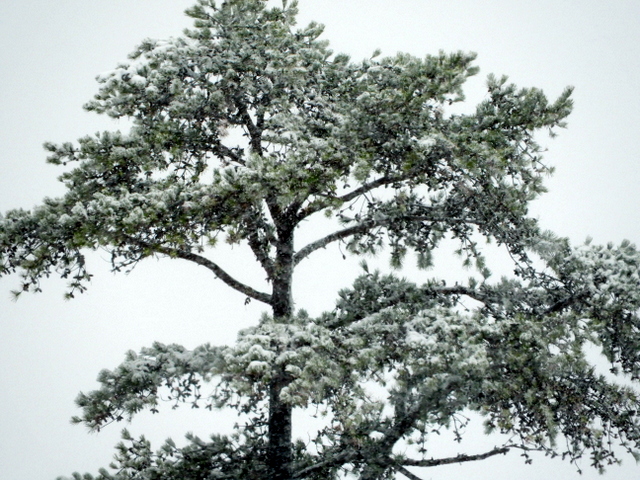
Evergreens in the snow.

Deciduous trees and evergreens, all frosty and lovely.

Managed to catch the moon in this one.

The neighbor's house in the snow.

Two does trek across the field.


Tuesday, January 07, 2025

We Had Ice, Ice Baby


Tuesday, October 08, 2024

2020 All Over Again

Yesterday at the grocery store, a somewhat familiar sight from the past greeted me:


Yes, the toilet paper was mostly gone.

I attributed this to two things: panic about the longshoreman strike at the ports (which lasted 2 days and has resolved itself for now) and the urge to donate goods into the many donation boxes that sprang up around the county to help out the folks who lost everything in the floods in far southwestern Virginia, North Carolina, and Tennessee, courtesy of Hurricane Helene.

We donated, too, but not toilet paper. We bought food for cattle at the local farmers' cooperative, which as I understand it went to our neighbors in far southwestern Virginia. I also donated to the United Way, which seems to be doing a good job in North Carolina.

It's hard to know what to do when an emergency strikes your neighbors - or your own community. You need and want help right away, but the flood waters have to recede, the winds have to die down, and the manpower has to be able to make to wherever you are.

I've been in the mountainous terrain in the areas around me, and there are tiny communities everywhere, back in the gullies and hollers where no one thinks anyone lives. Some people who are missing may never be found.

And now there's another hurricane headed for Florida, which also was hit by Hurricane Helene. I hope everyone has left the area as this large storm - Hurricane Milton - hits that part of the country again.

Tuesday, March 19, 2024

Fire on the Mountain


We have a forest fire directly across from us, in Stone Coal Gap and/or Broad Run. We saw it when we got up this morning, and I called my father first, since he lives over that way. He was unaware of the fire. 

Later I learned there was about 30 acres burning, and it was crawling up the ridge. This picture was taken around 10 a.m. this morning.

The Forest Service has been sending in helicopters and planes to drop water. I've never seen that done so have been trying to catch it happening. I've seen the helicopters but not the water drop.

We are under a severe burn watch because of low dew points and windy conditions. There are several other fires around us in other communities.


Tuesday, January 16, 2024

Snowy Woods


We ended up with about 4 inches of snow. The forecast was for much less, but that's ok. Unfortunately, the winds are supposed to howl in the next several hours and I've already seen some blowing snow, so we will have to deal with drifts in the driveway.

But it is a lovely snow and one that I don't think will be here for long, even though we're expecting very cold temperatures soon. I just hope there is enough snow left from the blowing winds to melt in the ground to help out with the drought.

Monday, January 08, 2024

Icy Saturday

We had ice on Saturday, until the afternoon, when it mostly melted. We had a 3/4 inch of rain. We are still in a drought situation, so the rain, in whatever form, is welcome.

Snow would have been nicer, though.


Wednesday, December 14, 2022

Possibilities

Rain and possibly freezing rain, meaning ice, are in the forecast for tomorrow. 

Not my favorite kind of weather.

One year, some time ago, we had inches of ice. The entire area glistened and twinkled.

Then it started cracking. I opened the door to hear the trees breaking. I listened - and sometimes watched - the limbs crack, the trees fall to the ground under the dead weight of the ice.

Snap! Snap!

It was terrifying, a bit like a gun going off. The world was still because the wind hadn't picked up yet, and the sounds of the trees breaking echoed off of my hill. It was unnerving, and unsettling, because I like trees.

I didn't want the trees to be hurt.

Mother Nature has to do a bit of pruning sometimes, though, to make way for new growth and climate changes. I've seen the microcosms of eco systems around me change. All it takes is the removal of one tree - sometimes one limb - for the things growing beneath to change. Add sunlight and heat because the tree no longer gives shade, and the ferns won't grow.

It doesn't take much, really, to change the landscape.

A bit more rain. Or a bit less. More clouds, less sunshine. Or vice versa. 

Something dies. Something grows.

Change is coming.

I can feel it in the air.


From 2007.


Monday, January 17, 2022

It Snowed

This was not a pretty snow. A pretty snow has lovely large flakes that dress the trees in dainty white outfits, and then it quickly melts and one can go on about the afternoon without worry.

This was a mean snow, the front that moved through yesterday and last night. This snow came in slick and small, but with great speed. At times the snow turned into a freezing mix, then a cold rain, and then back to snow. It brought wind with it, and the trees did not dress up but instead burrowed their roots into the cold ground to hang on.

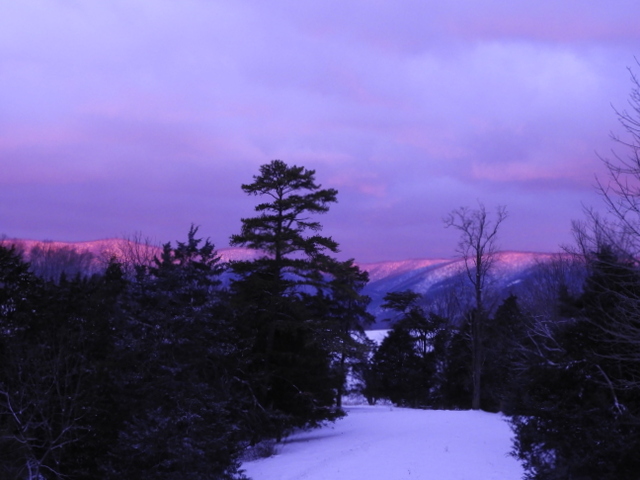
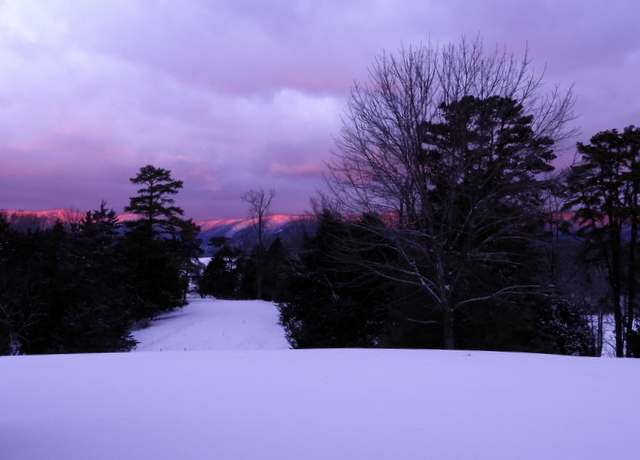
Morning brought an intriguing sunrise. I caught the reflection on the mountain tops, the snow already gone from the pines and cedars.


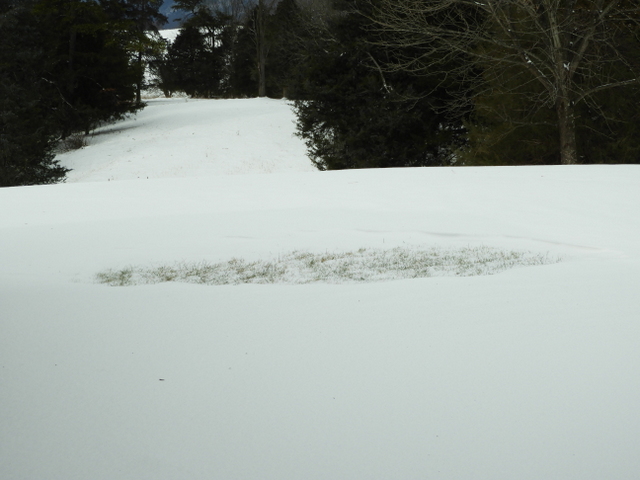
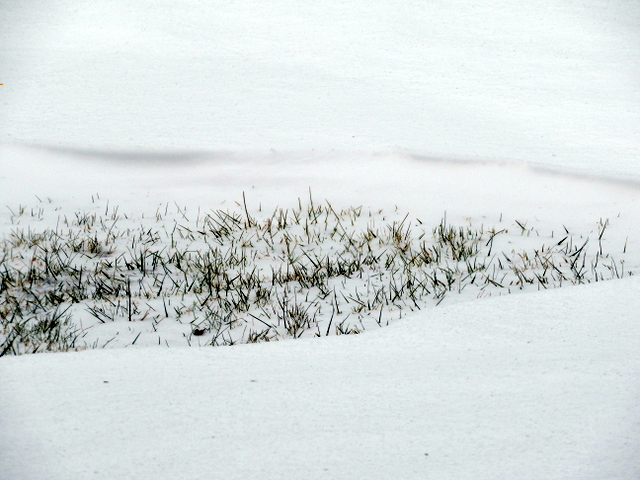
Around lunchtime, after listening to the winds howl and occasionally watching the snow ghosts dance like monsters in the front yard, I realized that at some point the wind had become a carver.


It left a roundish circle in the front yard, where I'd earlier seen it acting like a snow tornado, the wind whirling around as it pulled the snow up from the ground to spread it elsewhere, into drifts in the fields and along the roads and driveways.

I was sorry I did not catch it as it was making its art, that I'd instead been tending laundry or answering email, or simply staring out the wrong window.


Friday, January 14, 2022

Preparing for Snow

With the forecast calling for "plowable snow," my husband in particular has begun his snow preparations.

I went to the grocery store Wednesday, fueled up my car, and made a meatloaf yesterday. That's about the extent of my preparations, except for keeping the laundry completely caught up in case the power goes out.

However, husband has to fuel up the tractors, make sure the plow is on one of the tractors, double check the generators, fuel up his truck, and make sure he has plenty of chewing tobacco on hand. He also decided to go the landfill today.

We do not have a whole house generator. I wish we did, but we do have a portable one that will run the freezer, the fridge, the well pump, and a space heater. We have a grill we can put outside of the garage and cook on, if it comes to that.

So long as the lights stay on, we'll be fine. Even if they don't, we'll be fine.

Maybe if everyone has to stay home for a few days because of snow, the covid germs will give it a rest and the hospitals can catch up.


Monday, January 03, 2022

Year's First Snow

It came from the East, with wild howls and thunder

a snow like a blizzard along the Blue Ridge Mountain row

A squall with malice as trees fell asunder

unable to bear the weight of high winds and snow.


(Yesterday, January 2, it was 70 degrees.)


Monday, August 16, 2021

August 16 Happiness Challenge

It rained some more! The fields are a lovely green now. The cattle are looking quite content and everything has lost the coating of dust and grime that had settled on the tree leaves and grass.

We are expecting more rain which could end up with flooding, but after having this months-long drought, I am not going to complain.

See how green?


Each day in August you are to post about something that makes *you* happy. Pretty simple. And, it doesn't even have to be every day if you don't want it to be. It's a great way to remind ourselves that there are positive things going on in our lives, our communities, and the world.